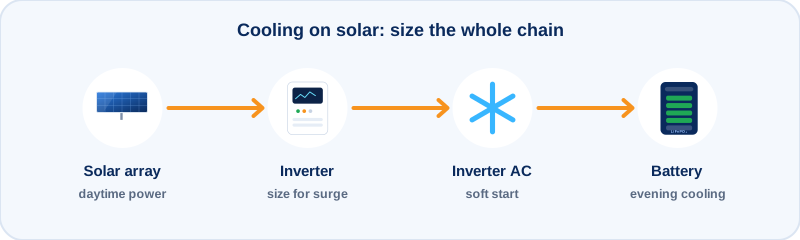
Quick answer: Yes, an inverter AC usually runs well on a properly sized hybrid solar system. Size the inverter for the AC plus everything that can run with it, allow headroom for start-up surge, give the AC its own correctly rated circuit, and be realistic about how long batteries can cool after sunset.
The most common solar question in a Pakistani summer is simple: "Can I run my AC on it?" The answer is usually yes, if the system is sized for the whole load and the wiring is up to it.
Inverter AC vs non-inverter AC on solar
A non-inverter AC switches its compressor fully on and off, with a sharp start-up current each time. An inverter AC ramps the compressor gently and then runs at a lower, steady speed. As compressor maker Danfoss puts it, "the motor continuously adapts speed to produce more or less cooling capacity to match the exact cooling need." For a solar system this is a big advantage: lower start-up stress and lower average draw once the room is cool.
Size the inverter for the AC plus everything else running with it, not the AC alone.
Size for the whole load, not just the AC
Overload alarms usually happen because several things start together. Add up what could run at the same time:
the AC (check its rated running power on the label),
fans, lights, fridge and TV,
a water pump or iron that someone switches on without thinking.
The inverter's continuous rating must cover that total, with headroom for start-up surges. Ask the installer to show their load calculation, not just a kW number.
Daytime power vs evening cooling
Panels decide how much power you have at midday. A bigger AC needs more array to run directly from the sun.
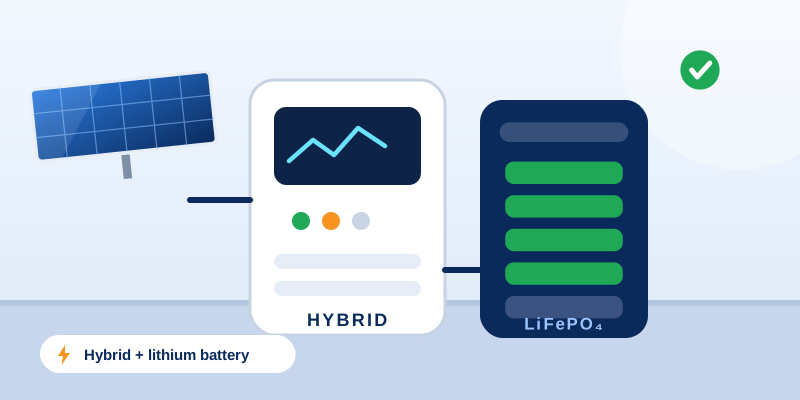
Battery decides how long you can keep cooling after sunset. Be realistic: running a big AC all night on batteries needs a large bank.
Pre-cool the house in the afternoon while there is surplus power, then hold the temperature with a fan and a moderate setting.
Why hybrid inverters trip or alarm
Overload: total load exceeds the inverter's limit. Fix by spreading loads or upsizing.
Voltage drop: undersized or overlong cable between inverter and AC. This causes heat and nuisance faults.
Shared circuit: the AC on the same line as other heavy appliances. Give it a dedicated, correctly rated circuit.
Loose terminals: a loose connection heats up under load and trips protection.
Smart habits that stretch your solar
Set the AC to a moderate temperature (around 24–26 °C is commonly recommended).
Close doors and curtains on sun-facing windows.
Clean filters regularly. A clogged filter makes the compressor work harder.
Use BLDC fans to circulate cool air at very low power.
Tip: Before adding a bigger AC or a solar system, have the wiring to the AC point checked. We can verify the cable, breaker and socket point and tell you if a dedicated line is needed.
This guide is general information to help you understand common home service issues. Rules, tariffs and prices change, and every home is different. Electrical, gas and plumbing work should be carried out by a qualified person.
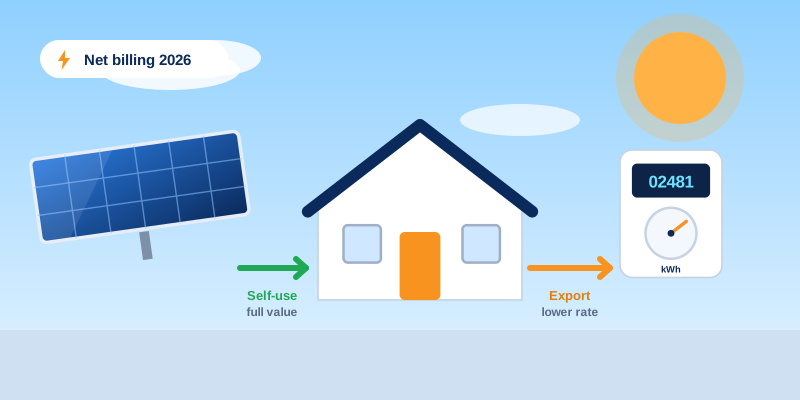
NEPRA's 2026 rules replaced net metering with net billing. What it means for rooftop solar owners in Islamabad and Rawalpindi, and the wiring that pays off.
EV cars and e-bikes are arriving in Pakistan fast. Learn what a safe home charging point needs: dedicated circuit, protection, earthing and fire safety.