Quick answer: A safe hybrid inverter and lithium battery installation needs proper earthing, DC and AC isolators and breakers rated from the manuals, solar-grade copper cable and correctly crimped connectors, a ventilated and dry battery location, and no back-feeding into the grid. Ask the installer to show their ratings, test every mode and label every circuit.
With net billing making self-use more valuable, hybrid inverters with lithium (LiFePO4) batteries are the upgrade everyone is pricing. The equipment matters, but the installation decides whether it is safe and lasts.
Why hybrid + lithium is trending
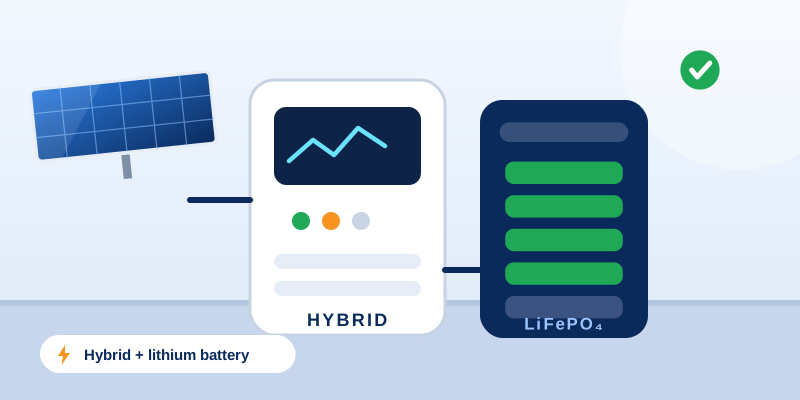
A hybrid inverter manages solar, battery and grid in one box. Pakistan Cables' 2026 solar outlook advises choosing an inverter marked "Battery Ready" so storage can be added later, with remote monitoring, and favours lithium iron phosphate (LiFePO4) batteries over lead-acid for their longer life. The trade-off is a higher upfront cost, which is why the install quality is worth checking carefully.
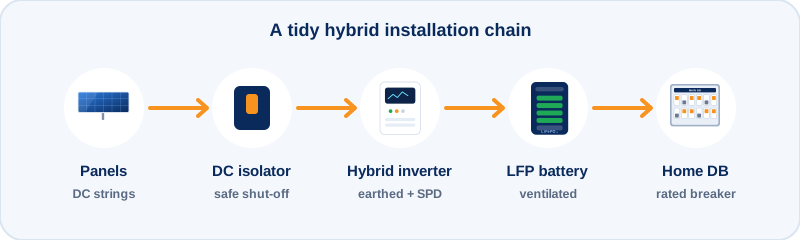
A tidy hybrid install: isolators, earthing and a properly rated breaker at every hand-over point.
1. Earthing and surge protection
Panel frames, the inverter body and the battery enclosure should be bonded to a proper earth.
Ask about surge protection on both the DC (panel) side and AC side. Voltage spikes and storms are the usual killers of inverters.
2. Isolators and breakers
A DC isolator between the panels and inverter, and a correctly rated breaker or isolator on the battery and AC sides.
Ratings must come from the inverter and battery manuals, not guesswork.
Everything should be labelled so anyone can shut the system down in an emergency.
3. Cables and connectors
Use proper copper solar-grade DC cable, UV-rated where exposed on the roof.
Connectors (MC4) must be properly crimped and matched. Loose or mixed connectors are a known fire risk.
Keep cable runs tidy, supported and protected from sharp edges and sun.
4. Battery location and ventilation
Install the battery in a ventilated, dry place, away from direct sun, heat sources and flooding.
Do not place batteries in a sealed cupboard, bedroom or on a damp floor.
Leave the clearance the manufacturer specifies around the unit.
5. No back-feeding, ever
The system must never feed power back into the supply lines during an outage. A proper changeover or the inverter's own protection must be in place. This protects line staff and your neighbours.
6. Your existing wiring
New equipment is only as safe as the board and cables feeding it. Check that your distribution board, breakers and socket wiring can handle the loads, and that the system stays within your sanctioned load.
Red flags: no isolators, no earthing, aluminium or undersized cable, loose connectors, batteries stacked in a cupboard, or an installer who cannot show you the ratings they used.
Finally: commission and test
A good installer tests every mode (solar, battery and grid), shows you the monitoring app and leaves you with labelled circuits and the manuals. Ask for all three.
We can inspect and prepare the electrical side of your home, including the board, wiring, earthing and circuits. Message us before you finalise an installer.
This guide is general information to help you understand common home service issues. Rules, tariffs and prices change, and every home is different. Electrical, gas and plumbing work should be carried out by a qualified person.
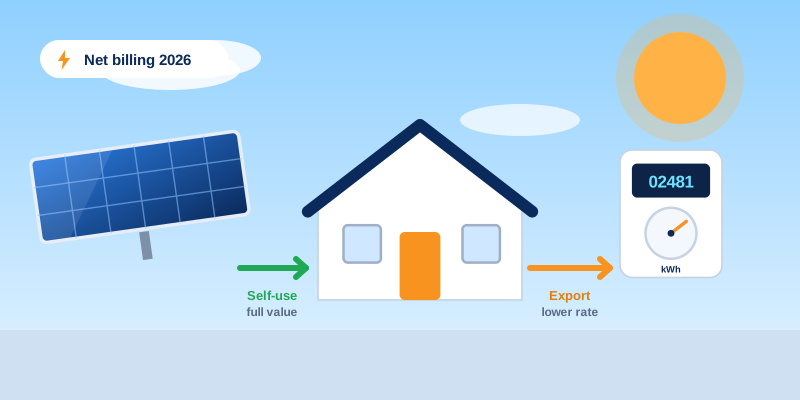
NEPRA's 2026 rules replaced net metering with net billing. What it means for rooftop solar owners in Islamabad and Rawalpindi, and the wiring that pays off.
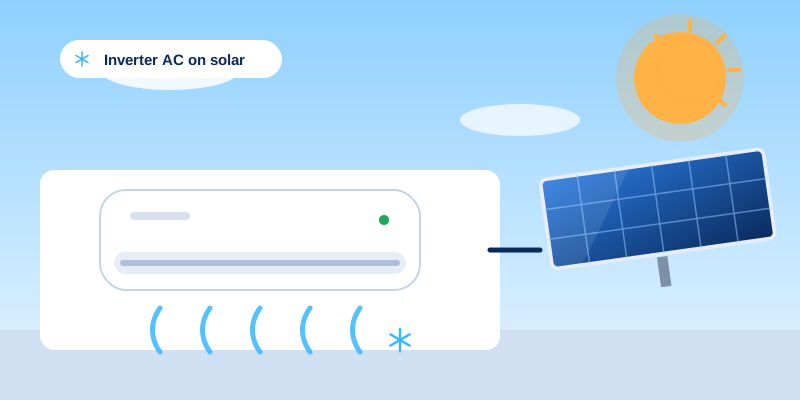
Will your hybrid inverter run your inverter AC? Learn how to size the system, why overload alarms happen and how to cool your home on solar without tripping.
EV cars and e-bikes are arriving in Pakistan fast. Learn what a safe home charging point needs: dedicated circuit, protection, earthing and fire safety.