Plumbing
Smart Leak Detectors & Auto Shut-Off Valves: The Plumbing Upgrade That Saves Your Ceiling
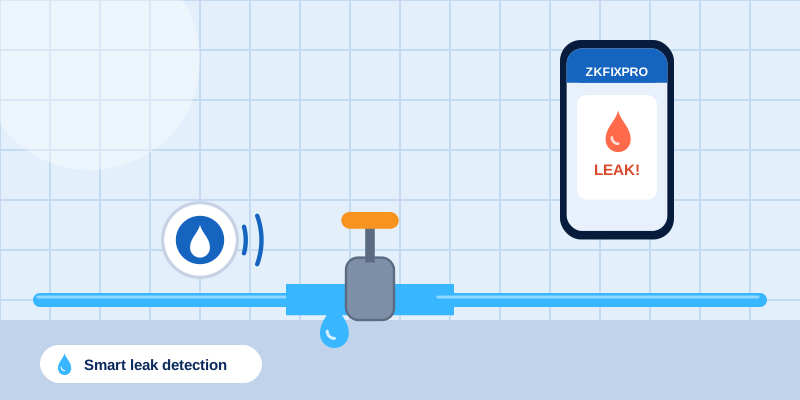
Self-reporting leak detection is a top 2026 plumbing trend. See how sensors, alerts and auto shut-off valves work and where to place them.
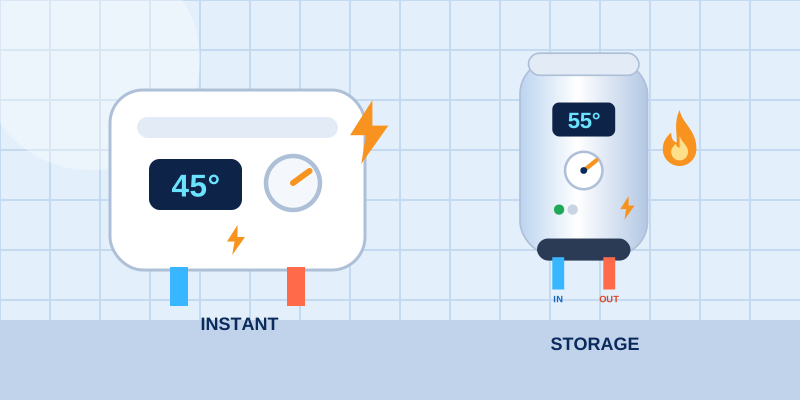
Low gas pressure, rising bills and carbon-monoxide worries have more homes rethinking their geyser. Here is how the three main types compare, and what each needs from your wiring and plumbing.
ServiceTitan's 2026 plumbing trends report names tankless water heaters among the most sought-after smart fixtures, because they heat water only when you use it. In Pakistan the shift is also driven by something practical: gas pressure drops in winter, and a gas geyser that struggles to light is both annoying and unsafe.
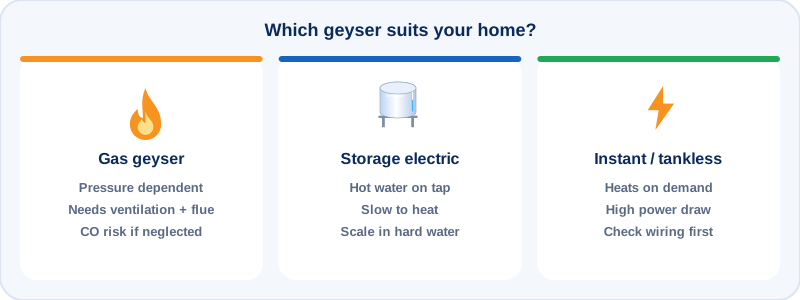
Small point-of-use instant heaters (for a single basin or kitchen tap) are popular because they are easy to fit and heat only what you use.
We handle electric geyser fitting and repair. Message us the model, the room and a photo, and we will advise on the wiring and plumbing it needs.
Message us your location and a photo of the problem. We will discuss the work needed and availability with you directly.
This guide is general information to help you understand common home service issues. Rules, tariffs and prices change, and every home is different. Electrical, gas and plumbing work should be carried out by a qualified person.
Self-reporting leak detection is a top 2026 plumbing trend. See how sensors, alerts and auto shut-off valves work and where to place them.
Aerators, dual-flush cisterns, pump timers and greywater reuse cut water and pumping costs. Practical upgrades for homes in Islamabad and Rawalpindi.
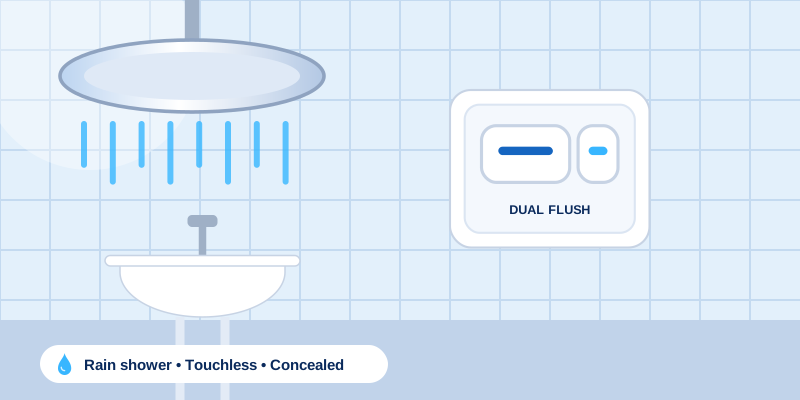
Rain showers, concealed cisterns, touchless taps and bidet sprays: the bathroom upgrade trends of 2026, with the plumbing and electrical checks each one needs.